3 Healthcare Technologies That Help Chronically Ill Patients
By First Products on Oct 18th 2022
Originally published October 18, 2022 | Updated August 14, 2026
Managing a chronic condition often requires more than an occasional office visit. Patients may need ongoing communication with healthcare providers, regular monitoring, access to health information, and support between appointments.
Healthcare technology is helping make that possible.
Telehealth, remote patient monitoring, and patient portals give healthcare organizations additional ways to stay connected with patients and make important information more accessible throughout the care process.
For patients managing chronic conditions, these technologies can help extend care beyond the traditional exam room while giving clinicians additional tools for communication and information-sharing.
3 Technologies Supporting Chronic Care
Three technologies have become particularly useful as healthcare organizations expand virtual and connected care:
- Telehealth for virtual communication between patients and healthcare professionals
- Remote patient monitoring for collecting health information outside traditional care settings
- Patient portals for giving patients access to information about their care
Each serves a different purpose, but they can become even more useful when incorporated into a connected clinical workflow.
1. Telehealth Services
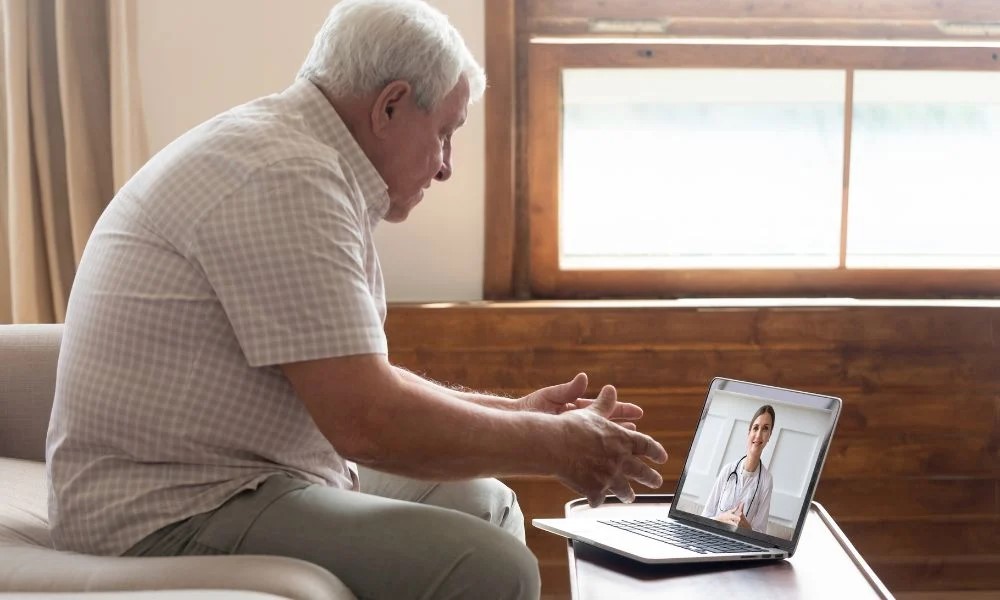
Telehealth allows healthcare professionals and patients to communicate when they are not physically in the same location.
For chronic care, virtual visits can provide another option for routine follow-ups, discussions about symptoms or medications, care-plan reviews, and other interactions that may not always require an in-person appointment.
Telehealth can also be used within healthcare facilities. A specialist in one location, for example, may communicate with a patient and clinical team elsewhere through a telemedicine system.
How Mobile Telehealth Carts Support Virtual Care
The technology behind a virtual visit still needs a physical place within the clinical environment.
Mobile telehealth carts can provide a flexible workstation for displays, cameras, computers, diagnostic peripherals, power systems, and other equipment used during virtual-care workflows.
Instead of treating the cart as simply a stand for a screen, healthcare organizations can configure the workstation around the technology and the way clinicians actually use it.
Important considerations may include:
- Camera and monitor positioning
- Device integration
- Mobile power requirements
- Cable management
- Cart maneuverability
- Equipment storage
- Cleaning and disinfection
The objective is to create a mobile platform that helps clinicians access the equipment they need while maintaining an efficient clinical workflow.
2. Remote Patient Monitoring
Remote patient monitoring, often abbreviated as RPM, uses connected technology to collect certain patient health information outside of a traditional clinical visit.
Depending on the application, remote monitoring may involve devices such as:
- Blood pressure monitors
- Heart or cardiac monitoring devices
- Connected scales
- Pulse oximeters
- Glucose-monitoring technology
- Other compatible connected medical devices
Bluetooth, cellular, Wi-Fi, and other connected technologies may allow information from these devices to be transmitted to healthcare platforms where authorized clinicians can review it.
Connecting Remote Monitoring With Clinical Workflows
Collecting data is only one part of remote patient monitoring. Healthcare organizations also need a practical way for clinicians to access and use that information.
Remote monitoring technology may be integrated with telehealth platforms, clinical workstations, medical carts, or other systems used to review patient data.
For example, information gathered between appointments may provide additional context during a telehealth consultation. Rather than relying only on what happens during the virtual visit, the clinician may have access to information collected over a longer period of time.
The exact devices, clinical processes, and monitoring protocols will vary by healthcare organization and patient population, so the technology should be selected around the intended workflow.
3. Patient Portals
Patient portals give individuals secure digital access to information related to their healthcare.
Depending on the healthcare system, a portal may allow patients to view information such as:
- Appointments
- Test results
- Medication information
- Visit summaries
- Care instructions
- Messages from healthcare providers
For someone managing a chronic condition, having convenient access to this information can make it easier to reference parts of their care plan between appointments.
Patient portals can also complement telehealth and remote patient monitoring by giving patients another way to interact with the digital systems supporting their care.
How Telehealth, Remote Monitoring, and Patient Portals Work Together
These three technologies are often most useful when they are viewed as parts of a larger connected-care strategy rather than isolated tools.
Consider a simplified chronic-care workflow:
- A patient uses a connected device at home to collect health information.
- The information is transmitted through a remote patient monitoring platform.
- The patient reviews relevant care information through a patient portal.
- A healthcare professional reviews available information before or during a telehealth appointment.
- The patient and provider discuss progress, concerns, and appropriate next steps.
In this type of environment, technology helps connect what happens between appointments with what happens during the clinical encounter.
The Physical Side of Digital Healthcare Matters, Too
Digital healthcare is often discussed in terms of software, connectivity, and data. But healthcare organizations also need to consider the physical environment surrounding that technology.
Where will the monitor be positioned? How will a camera move between rooms? Where will diagnostic peripherals be stored? Does the workstation need battery power? Can staff maneuver it easily through patient rooms and hallways?
A well-designed mobile medical or telehealth cart can bring the technology together in one configurable platform.
This can be particularly important when healthcare organizations need to integrate multiple devices rather than deploy a single laptop or tablet.
What to Consider When Implementing Chronic Care Technology
Before introducing new technology into a chronic-care program, healthcare organizations should consider both the technology itself and the workflow surrounding it.
Questions to consider include:
- Who will use the technology?
- Where will patients and clinicians use it?
- Which devices need to work together?
- How will information move between systems?
- What equipment needs to be mobile?
- How will devices be powered and charged?
- How will equipment be cleaned and maintained?
- Can the physical workstation adapt as technology changes?
Starting with these questions can help ensure that new technology supports the clinical process rather than adding unnecessary complexity to it.
Building a More Connected Chronic Care Environment
Telehealth, remote patient monitoring, and patient portals each offer healthcare organizations different ways to support communication and information access beyond the traditional office visit.
The technology itself, however, is only part of the equation.
Successful implementation also depends on how devices, software, workstations, and clinical workflows fit together.
First Products designs and manufactures mobile healthcare technology solutions that can support telehealth, remote patient monitoring, diagnostic equipment, computers, displays, cameras, mobile power, and other clinical technologies.
Whether an organization needs a configurable workstation or a more specialized integrated system, the best solution begins with a clear understanding of the technology, users, and workflow it needs to support.
Explore First Products mobile telehealth carts and workstations to find a platform for your healthcare technology application.
Frequently Asked Questions
What technologies are commonly used to support chronic care?
Telehealth platforms, remote patient monitoring devices, patient portals, electronic health records, connected medical devices, and mobile clinical workstations can all play a role in chronic-care workflows. The appropriate technology depends on the patient's needs and the healthcare organization's care model.
What is remote patient monitoring?
Remote patient monitoring uses connected devices and technology to collect certain patient health information outside of a traditional clinical visit so that authorized healthcare professionals can review the information according to the organization's clinical workflow.
How does telehealth support patients with chronic conditions?
Telehealth gives patients and healthcare professionals another way to communicate without always being in the same physical location. It may be used for follow-up appointments, care discussions, and other appropriate virtual interactions.
What is the role of a mobile telehealth cart?
A mobile telehealth cart provides a physical platform for technology such as monitors, computers, cameras, diagnostic peripherals, storage, and mobile power. The cart can allow a healthcare organization to move an integrated telehealth system between rooms or clinical areas.
Can telehealth and remote patient monitoring be used together?
Yes. Depending on the healthcare program, information gathered through remote monitoring may provide additional context that clinicians can review before or during a telehealth interaction.